
Utah Criminal Court Records Database
Utah criminal court records are public documents held by the district and justice courts across all 29 counties in the state. These case records include criminal charges, case filings, court dockets, judgments, and final dispositions for cases tried in Utah courts. You can search criminal court records through the Utah XChange system online, at free public terminals in courthouses, or by contacting the court clerk in the county where a case was filed. The Utah Bureau of Criminal Identification also maintains a statewide criminal history repository for individual record access.
Utah Criminal Court Records Quick Facts
Utah Criminal Court Records Overview
Criminal court records in Utah are created and maintained by the court system each time a criminal case is filed. These records document every step of the legal process. A case record typically contains the case number, the names of all parties, the charges filed, each document submitted to the court, all hearings held, and the final disposition of the case. Dispositions can include a conviction, acquittal, dismissal, or plea agreement. Case records also note the assigned judge and any attorneys of record. This information is entered into the Utah Courts Information System, known as CORIS, by court staff and flows into the public XChange database.
Utah courts are divided by the level of offense they handle. District courts hold general jurisdiction and take cases involving felonies and Class A misdemeanors. These are the more serious criminal matters. Justice courts operate at the limited jurisdiction level and handle Class B misdemeanors, Class C misdemeanors, infractions, and traffic violations. Both court types generate criminal case files that are available to the public. Juvenile court records are handled separately and are generally not accessible to the general public under state law.
Criminal court records exist for all finalized cases unless they have been sealed or expunged. Sealed records are restricted by court order. Expunged records are removed from the XChange system and from BCI criminal history files. Records involving adoptions, civil commitments, and certain protective orders are also excluded from public view under the Utah Code of Judicial Administration.
Note: Expunged and sealed criminal records do not appear in the XChange public search or BCI criminal history results in Utah.
How to Search Utah Criminal Court Records
The Utah XChange system is the main tool for searching criminal court records across the state. XChange is the public case search repository for all Utah district and justice court case information. It pulls data directly from the CORIS case management system used by courts in all 8 judicial districts. You can search by party name or case number to locate criminal cases. Results show party names, party addresses when available, assigned judges, attorneys of record, documents filed, hearings held, judgments entered, and case outcomes. Document images for district court cases filed since July 1, 2010 are available for purchase through the system.
The Utah Courts website hosts the XChange portal. Visit utcourts.gov/xchange to access the system. Online access requires a subscription at $30 per month or $240 per year. If you do not want a subscription, you can use a free public terminal. Most Utah district courthouse locations have public terminals that provide free access to the same XChange data. You do not need an account to use a courthouse terminal.
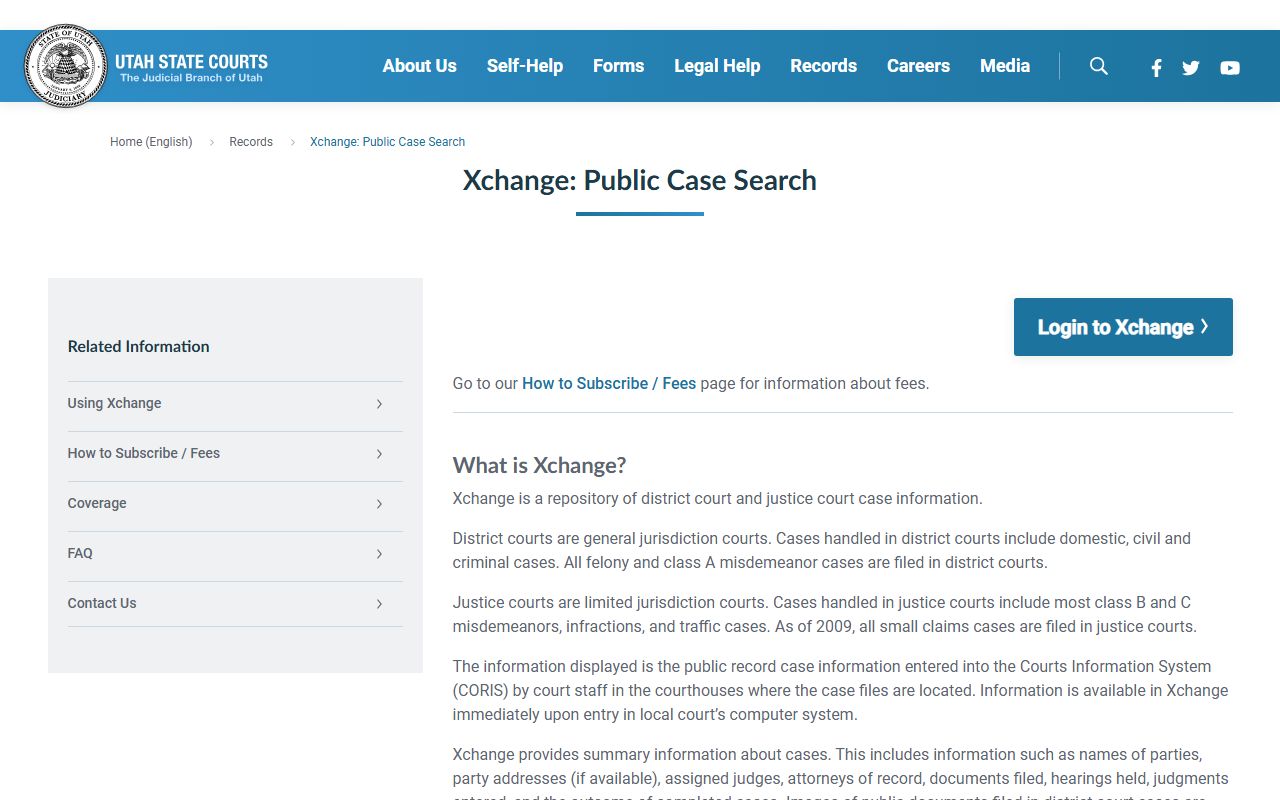
The XChange portal at utcourts.gov/xchange is the fastest way to locate case filings and criminal records from home. Courthouse terminals offer free access during business hours for those who prefer an in-person search.
Parties named in active Utah court cases can also use the MyCase portal at no charge. MyCase gives direct access to case documents, upcoming hearing dates, and judgment information for cases where you are a named party. It also allows online payments for fines and fees and sends email or text notifications when the case updates. MyCase is separate from XChange and is limited to your own cases. Free registration with a valid email address is all that is required.
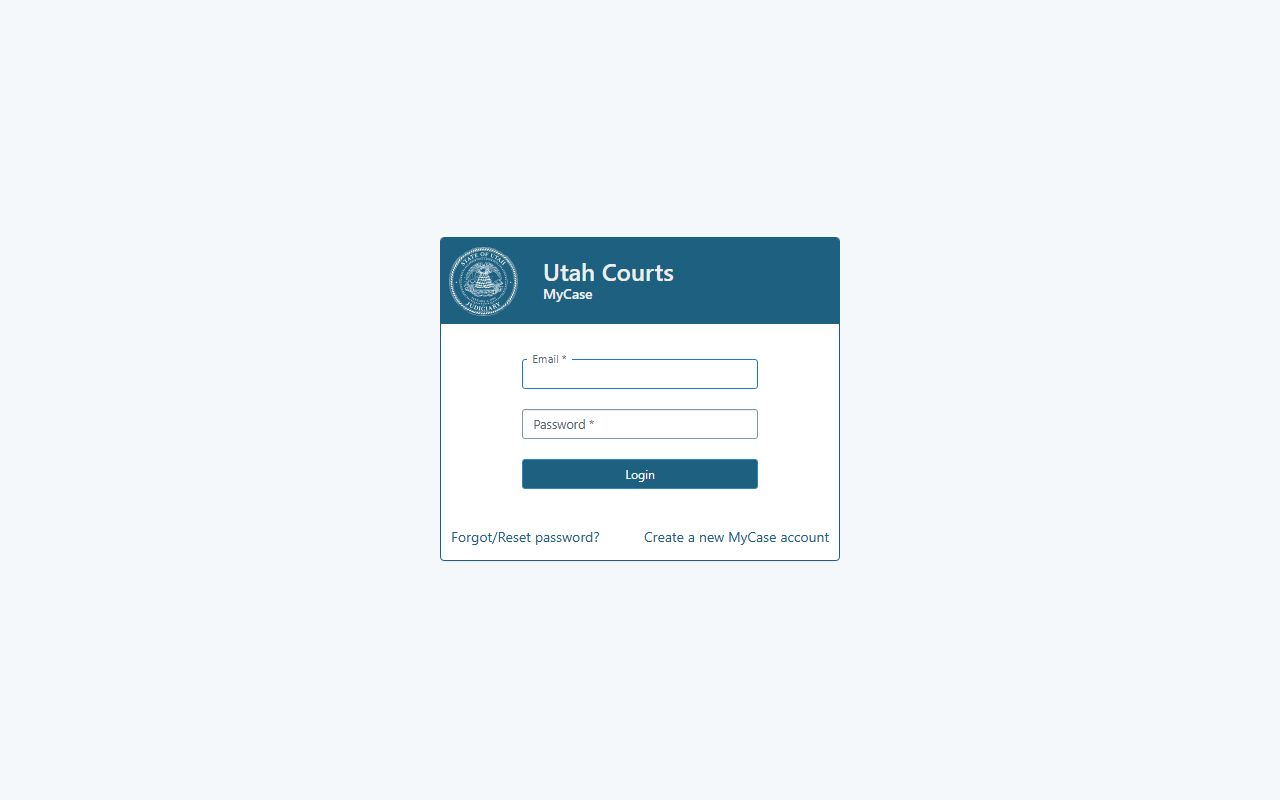
The MyCase portal at mycase.utcourts.gov gives parties to active cases secure 24/7 access to their own case files and filings without a subscription fee.
Utah Bureau of Criminal Identification Records
The Utah Bureau of Criminal Identification, known as BCI, maintains the official statewide criminal history repository for Utah. BCI is the central clearinghouse for criminal records in the state, holding information on arrests, convictions, and case dispositions. Individuals can obtain their own criminal history record through BCI either in person or by mail. This is different from searching XChange, which searches active court case data. BCI records reflect the full criminal history compiled from court and law enforcement reporting statewide.
In-person requests at BCI require a valid government-issued photo ID. Note that Utah Driving Privilege Cards are not accepted. You must fill out the Criminal History Application available on the BCI website before visiting. Mail requests also require the completed application form. Effective July 1, 2025, the Right of Access fee for an individual criminal history record is $20. BCI is located at 4315 South 2700 West Suite 1300, Taylorsville, UT 84129. The phone number is (801) 965-4445. Office hours are Monday through Friday, 8:00 a.m. to 5:00 p.m., closed on weekends and state holidays.
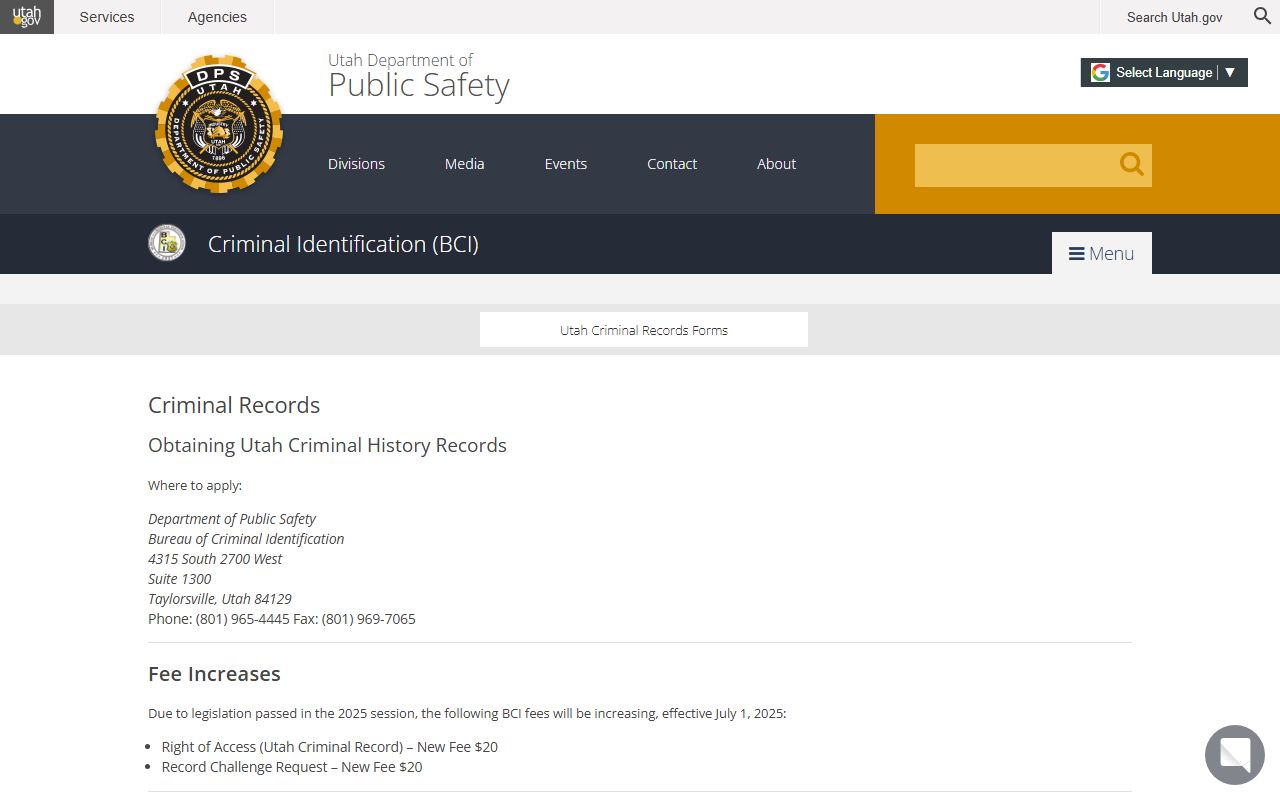
The BCI criminal records page at bci.utah.gov/criminal-records has the application forms, fee schedule, and full instructions for requesting your own criminal history in Utah.
BCI records distributed for employment and similar purposes exclude charges that were declined for prosecution, dismissed charges, and acquittals. This means what BCI provides for a background check differs from what appears in the full XChange case system. Criminal penalties and civil liability apply for unlawful receipt or redistribution of BCI records. Always use BCI records only for their lawful, stated purpose under Utah law.
Note: BCI fingerprinting services are available by appointment for an additional $20 fee, effective July 2025, at the Taylorsville office location.
Utah Court System and Jurisdiction
Utah is organized into 8 judicial districts. Each district covers a specific set of counties and operates its own district courts and associated justice courts. The judicial districts span all 29 Utah counties. Understanding which court handled a case helps you know where to look for criminal case files and court dockets. District court records and justice court records are both accessible through XChange, though each court type handles different offense levels.
District courts in Utah hold general jurisdiction. They handle felony criminal cases and Class A misdemeanor cases. These are the most serious levels of criminal charges in the state. District courts also handle civil cases involving amounts over $11,000, domestic relations, probate, and appeals from justice courts. When a person is convicted of a felony in a Utah district court, the case file is retained for 75 years under court records retention schedules set by the Judicial Council.
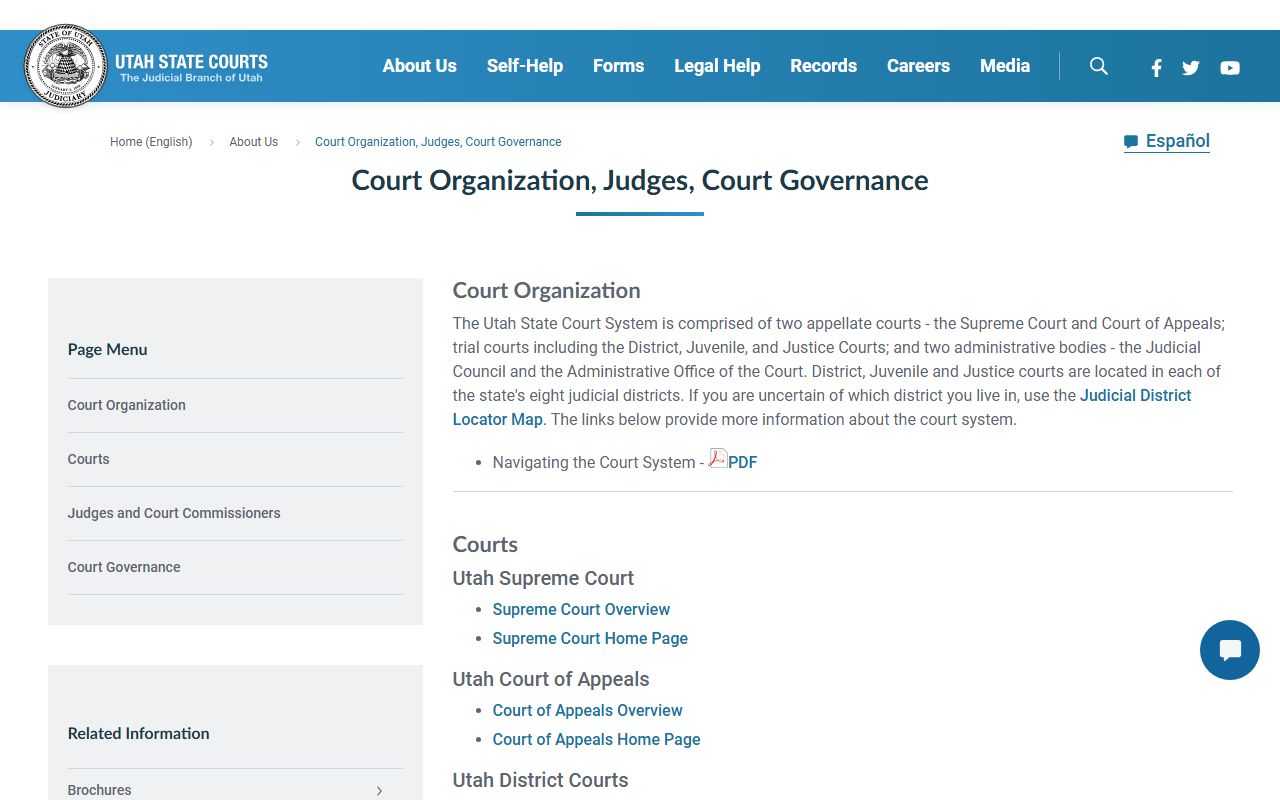
The full breakdown of Utah court structure and district coverage is available at utcourts.gov/courts, where you can also find contact information for each district court clerk across Utah.
Justice courts operate at the limited jurisdiction level. They handle Class B and Class C misdemeanors, infractions, traffic violations, small claims cases up to $11,000, protective orders, and preliminary hearings. Many cities and counties in Utah operate their own justice courts. Criminal case records from justice courts are also part of the XChange system, making them searchable alongside district court records. Juvenile courts handle delinquency proceedings and child welfare matters. Juvenile court records are not publicly accessible under Utah law and do not appear in the XChange case search.
The Utah State Courts are overseen by the Judicial Council, which sets statewide policy and adopts uniform rules for court administration. The Administrative Office of the Courts manages day-to-day operations and maintains the court records systems. The Utah State Courts website at utcourts.gov provides public access to court information, forms, and the XChange portal.
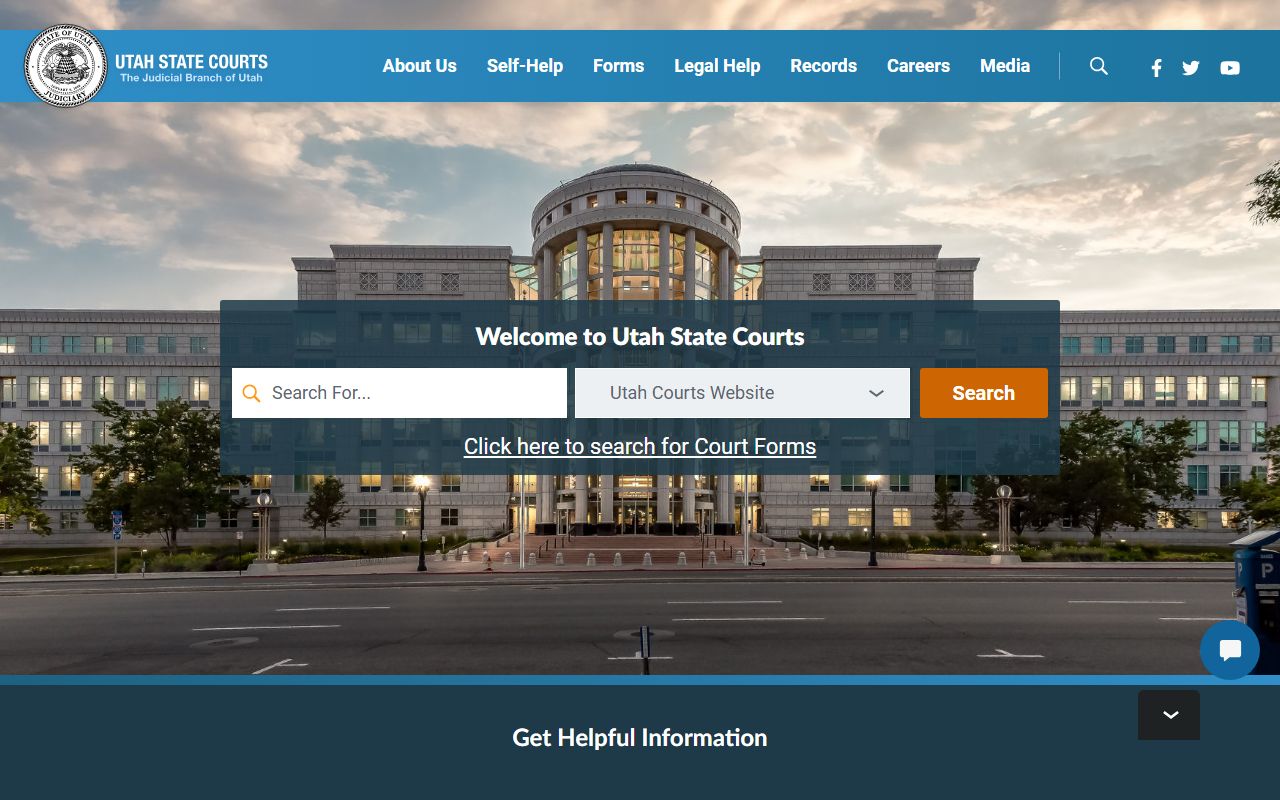
Visit utcourts.gov to reach the Utah State Courts main portal, which links to XChange, MyCase, court forms, and district and justice court locations across all 8 judicial districts.
GRAMA and Public Access in Utah
The Government Records Access and Management Act, commonly called GRAMA, is the Utah law that governs public access to government records. GRAMA is codified at Utah Code Title 63G, Chapter 2. Under GRAMA, a record is public unless a statute expressly says otherwise. This means criminal court records in Utah are presumed to be open to the public. You do not have to explain your reason for requesting a record. Any person has the right to inspect public records free of charge during normal working hours.
When you submit a records request to a court or government agency in Utah, that agency has 10 business days to respond. Media requests are processed in 5 business days. If the agency denies your request, you have the right to appeal through the State Records Committee or to district court. Agencies may charge fees for copies of records. The standard fee is $0.25 per page. Fees for research or compilation time may apply after the first 15 minutes of staff time. Fee waivers are available for requests that benefit the public interest or for individuals who demonstrate financial hardship.
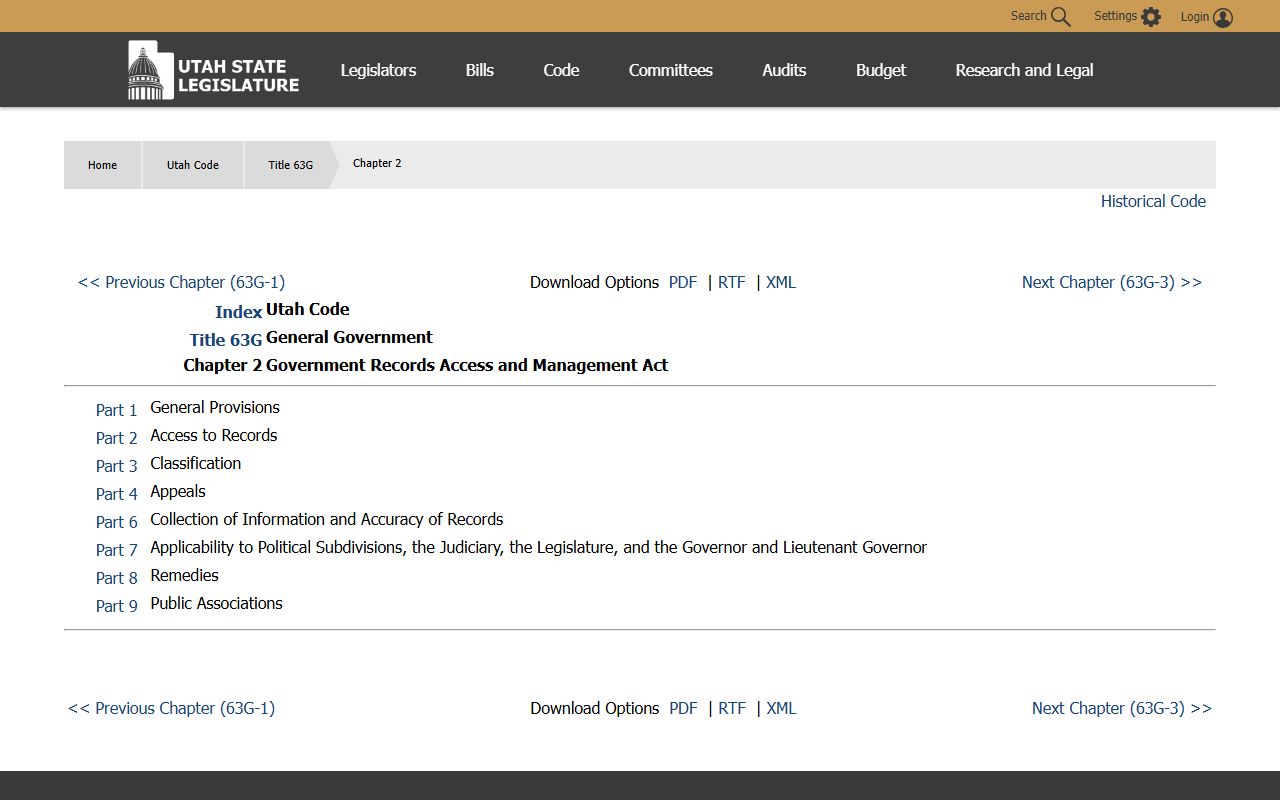
The full text of GRAMA is at le.utah.gov, where you can read how Utah classifies records as public, private, controlled, or protected and how each category is handled.
Not every record is open under GRAMA. Some criminal court records in Utah are restricted. Sealed court cases, expunged records, juvenile records, adoption records, mental health proceedings, and active investigation records are not available to the public. Records containing Social Security numbers, financial account numbers, and medical information are protected under Utah Code Section 63G-2-305. Court records are classified further under Utah Code of Judicial Administration Rule 4-202, which defines which court records are public and which are restricted in Utah.
Note: Utah Code of Judicial Administration Rule 4-202.02 makes some records private in civil actions, including divorce and protective order cases, even though the criminal case system is broadly open.
Utah Department of Corrections Offender Search
The Utah Department of Corrections operates a free online offender search database for looking up individuals under state supervision. The search covers people currently incarcerated in Utah state prison facilities as well as offenders on probation or parole. This is a useful supplement to criminal court records searches because it shows the current status of someone who has been convicted and sentenced in Utah. The database is updated on a weekly basis.
You can search the offender database by name or by offender number. Results include offender location, sentence details, and projected release dates. The database also includes basic demographic information and conviction details. This tool only covers state-supervised individuals. It does not include people held in county jails, so you would need to contact the county sheriff directly for that information. Federal inmates are also excluded and must be searched through the Federal Bureau of Prisons.
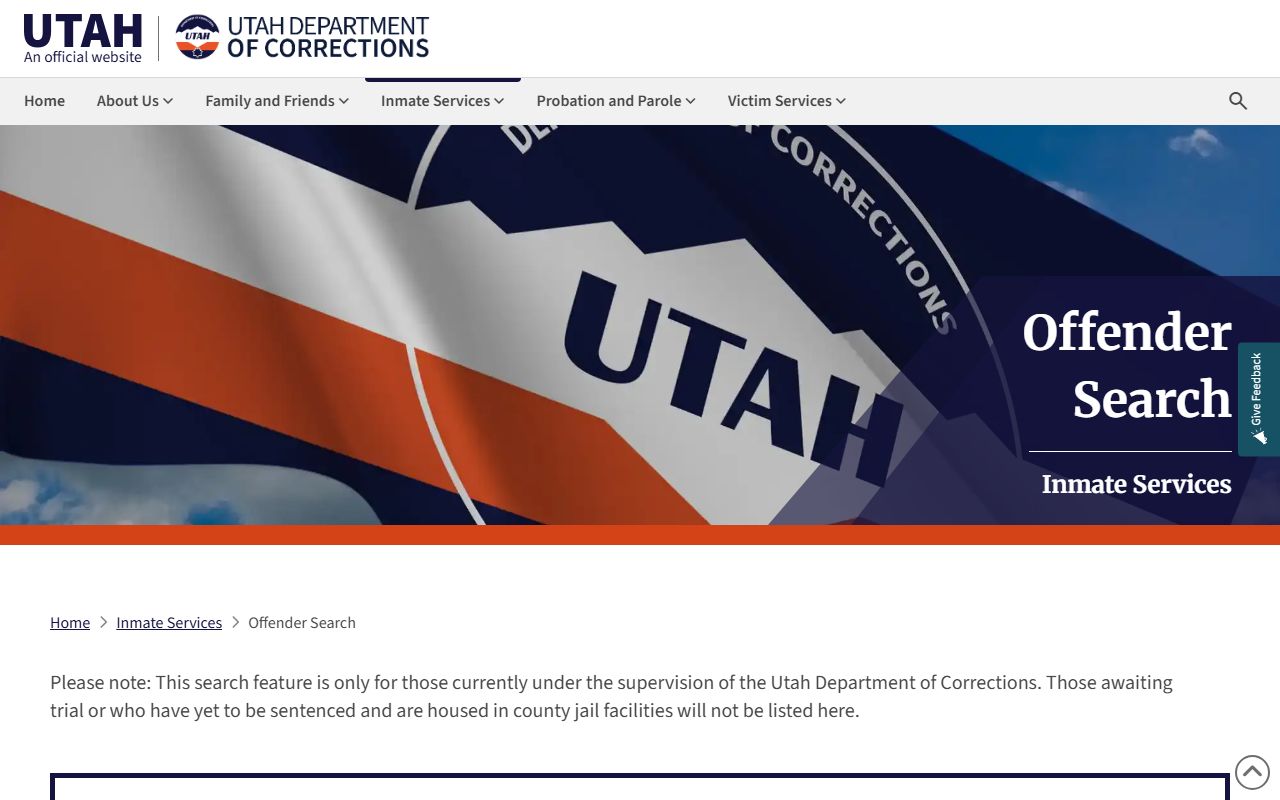
Access the free offender search at corrections.utah.gov to look up current inmates and those on probation or parole supervision across Utah's state prison system.
Utah Clean Slate and Expungement
Utah enacted one of the country's first automatic expungement laws in 2019. House Bill 431, known as the Clean Slate law, was implemented on February 10, 2022. This law automatically expunges qualifying criminal records without requiring the individual to file a petition or pay any fees. Utah was the second state in the nation to pass automatic expungement legislation. When a record is expunged under this law, it is removed from the XChange public case search and from BCI criminal history files. A person with an expunged record may legally respond to inquiries as if the offense never occurred.
The Clean Slate law applies to Class A misdemeanor drug possession convictions, most Class B and Class C misdemeanor convictions, minor regulatory offenses, and infractions. The offense must meet crime-free waiting periods before automatic expungement applies. Waiting periods are 5 years for Class C misdemeanors and infractions, 6 years for Class B misdemeanors, and 7 years for Class A drug possession misdemeanors. Some offenses are excluded from automatic expungement regardless of how much time has passed. These include registerable sex offenses, domestic violence convictions, certain weapons offenses, and DUIs.
Learn more about automatic expungement eligibility at cleanslateutah.org, where Clean Slate Utah provides clear information on which convictions qualify, the required waiting periods, and how the process works.
For criminal records that do not qualify for automatic expungement, Utah offers a petition-based process. You must obtain a Certificate of Eligibility from BCI before filing a petition with the court. Waiting periods for petition-based expungement are different from the automatic process: 7 years for felonies (5 years for drug-related felonies), 5 years for Class A misdemeanors, 4 years for Class B misdemeanors, and 3 years for Class C misdemeanors and infractions. House Bill 352, effective October 1, 2024, eliminated BCI certificate fees for qualifying low-income individuals seeking petition-based expungement.
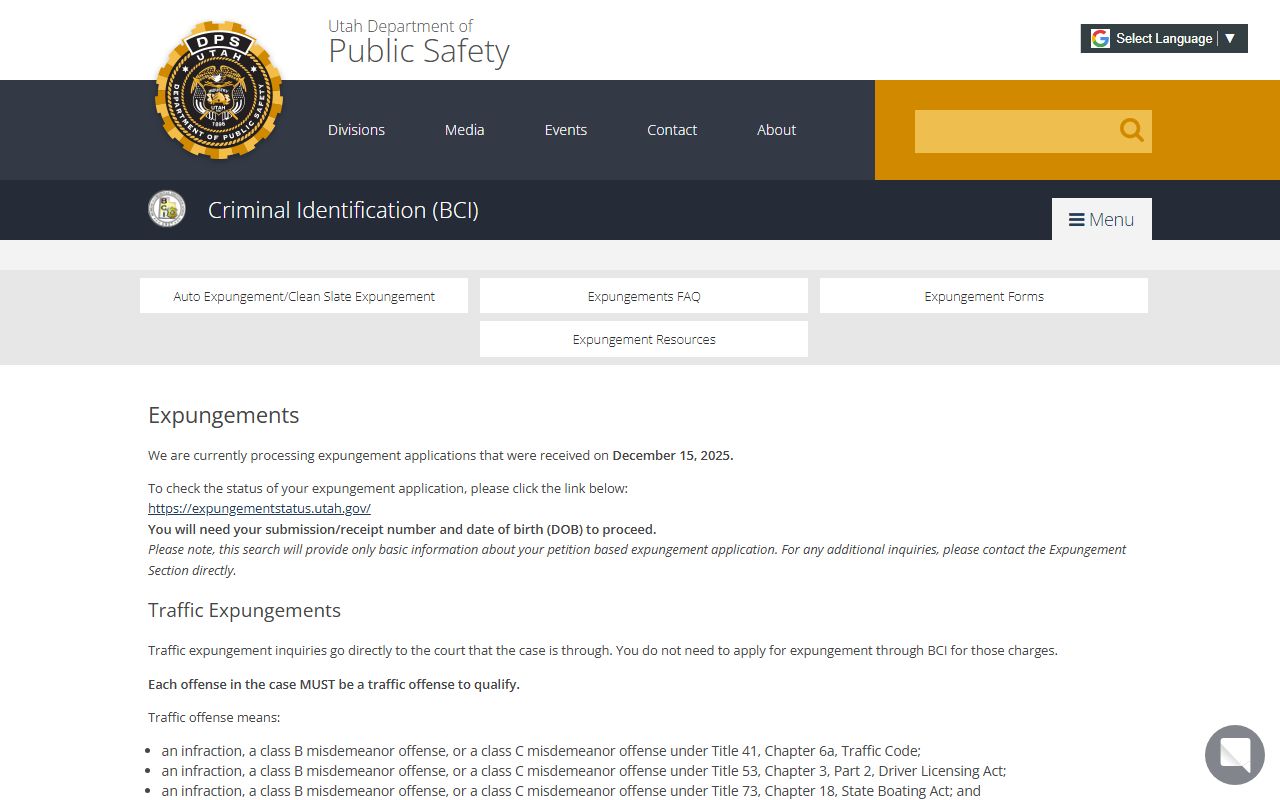
The BCI expungements page at bci.utah.gov/expungements walks through the Certificate of Eligibility process and the steps for filing a petition-based expungement in Utah court.
Browse Utah Criminal Court Records by County
Each of Utah's 29 counties has its own district court that maintains criminal case files, court dockets, and case records. Select a county below to find local court contact information and resources for criminal court records in that area.
Find Criminal Court Records in Utah Cities
Utah residents file criminal cases at the district or justice court serving their city. Select a city below to find criminal court records resources and local court information for that area of Utah.